Being a woman, whether that is playing the role of a wife, mother or single has its challenges. We are overwhelmed, overworked, and underpaid! We face daily pressures to get it right and after a long, hard day we fall into bed allowing our minds to race through the day analyzing and criticizing our every move. We set standards for ourselves that are unrealistic and unattainable.
How far we follow Jesus is determined by how deep we see His forgiveness in us!
Think about that statement…when we only deal with the superficial forgiveness of Jesus in our lives, we will tend to superficially follow Him. He is a great “feel good” convenience allowing us to wear the t-shirt that says, “follower of Jesus”.
But ask yourself this question…would you have followed Jesus all the way to the cross?
Vashti enters this story at a young age. History tells us that she had been found as a child after her father had been killed in battle against another kingdom. As she sat weeping in her father’s castle, the opposing king found pity on her and took her back to his kingdom. Once she had grown, the king gave her as a gift to his own son. She was now Queen Vashti married to King Xerxes.
King Xerxes was a great king who ruled 127 provinces from India to Ethiopia, approximately 2,682 miles.
When we look at the greats of the Old Testament, we often think of Abraham (the father of the nation of Israel); Moses (the one who led the Israelites out of captivity in Egypt) or King David (the one who killed the giant.)
If I were to ask you who were some of the great women of the Bible, what would you say?
Typically, we would name Ruth, Esther, or the Proverbs 31 woman. For the sake of this story, though, let’s focus on Queen Esther.
Do you remember Queen Esther? Remember she was the one who was chosen by the King because of her extreme beauty? After a yearlong competition by all the virgins in the region, she was selected as queen. God used Esther’s position as queen to save the Jewish people from being massacred. There are many turns and twists to this story that place Esther on the pedestal of heroine. She was truly a queen to be honored.
But if you were to open your bible and turn to the book of Esther in the Old Testament (which I would strongly suggest) you will see that the actual story of Esther doesn’t start until chapter 2. There is a whole chapter prior to the story that lays a foundation most are not aware of.
“But after Xerxes’ (that would be King Xerxes) anger had subsided, he began thinking…” Esther 2:1 NLT
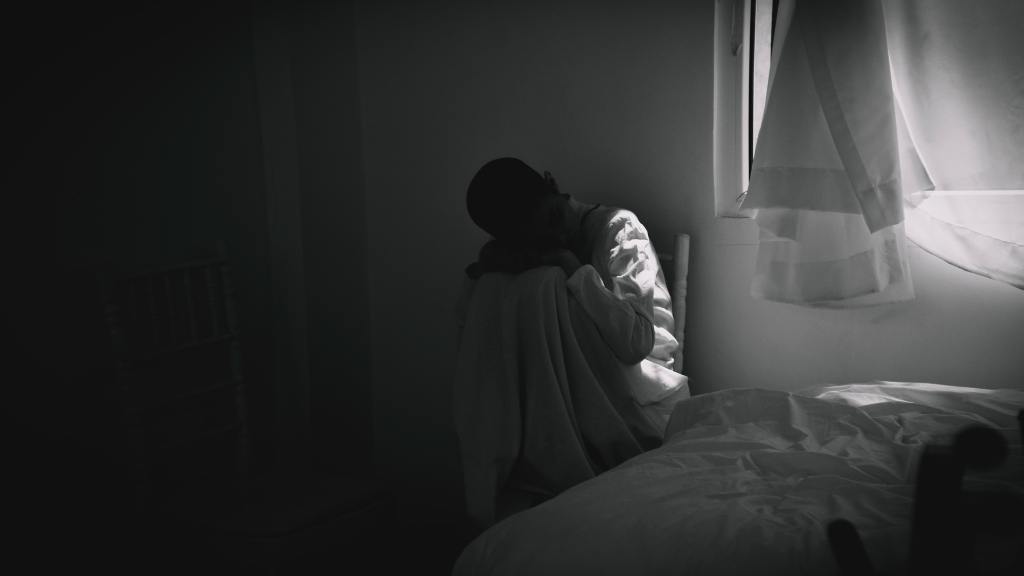
As Mary walked down the hall stepping closer to her bedroom door, there was an innate sense that something was different. With each step, she had a sense that something had changed. She couldn’t quite figure it out, but something was wrong. She felt unsettled; off centered; unanchored. As she placed her hand on the doorknob of her room, a feeling of displacement crept inside her.
Sitting at the breakfast table earlier that morning, things felt different. The conversation wasn’t as free flowing as she had become so accustomed to. For some reason, it seemed as though the others didn’t look into her face but peered around her as though she no longer existed. Conversations were cut short and shallow. As she finished her breakfast, she stood to dismiss herself. No one looked up from the table. No one said, “Have a good day.” There was something about that morning that gave her the sense that her day was going to be anything but good.
Her hand slowly turned the knob on her bedroom door. When her hand completed the turn of the knob, a knot gathered into the pit of her stomach. As she looked into her room, it was gone. It was all gone. Everything that was personal to her was removed from the shelves. Her favorite blanket was taken off the bed. Her closet was no longer her closet. It had been emptied of everything she owned. Everything that she called her own had been boxed up and now stacked in the corner of the room.
COMPLETE…words we like to see on a finished project or an emotionally healing…COMPLETE! Done…finished…perfected! Once a project is stamped COMPLETE, then we can move onto the next project. There is nothing I like more than a sense of accomplishment. But truthfully, there are many things in my life that never get that stamp of completion. I can’t seem to permanently fix my mouth when I’m frustrated with others. I can’t fix my emotional outbursts. I can’t permanently fix my anger. I can’t fix my weight issue or my out of shape body. I try, but these things never get that stamp COMPLETE!
Paul and I share about our broken marriage in a broadcast on Focus on the Family.
This broadcast aired on November 28. 2018
This is a longer blog post…approximately 28 minutes of broadcast, but my heart feels there may be some of you who need to hear this today. Marriage is extremely difficult for some of us and this broadcast will share with you some of the hurt that Paul and I have gone through in our own marriage. My prayer is that it will give you hope, not only in your marriage, but hope for you! Ultimately, this struggle for Paul and I was not about our marriage, it was about a deep healing that both of us needed to experience for ourselves.
Click on the link above HEALING OUR HURTING MARRIAGE to listen
Below is a transcript of this message taken from the website. My encouragement to you is to listen to the message as you will hear our brokenness after returning to the church from a long sabbatical.
Paul Westbrook: As I look back, I also realize that I had actually lowered the bar when it came to the definition of a great marriage at some point in – in my life. And of course, when you lower the bar for a great marriage, it’s easier to hit it.
John Fuller: You’re gonna hear today, on Focus on the Family, from Paul and Melody Westbrook – how their marriage hit rock-bottom and how their marriage was saved. And your host is Focus president and author Jim Daly. Thanks for joining us. I’m John Fuller.
Jim Daly: John, today we’re gonna hear the nitty gritty details of the near-death of a marriage from the point-of-view of both the husband and the wife. And let me tell you, this is a riveting story. Paul Westbrook is the senior pastor of a church in Illinois that he and his wife, Melody, helped plant back in 1991. After leading their rapidly growing church for over 20 years, this marriage finally hit the wall in the fall of 2014. And that’s the story we’re gonna share with you today.
John: Here now, Paul and Melody Westbrook speaking at their home church, and you’ll hear Paul lead off and then Melody come in later on.
Paul: In November of last year we found ourselves at a point where our marriage hit rock-bottom. I actually, a little self-deceit, I thought things were goin’ pretty good. And about a month before that, we’d had what I thought was a really good conversation and I thought we were just humming along. But what I didn’t realize was that Melody was carrying some deep hurts and frustrations in her life that were largely a part of things that I had said and done, just um, ignorant things that I’m embarrassed and ashamed of.
That along with my drivenness and my focus and the long hours that I put in with church stuff and all that, threw us into this uh, this major crisis mode. And it was like this wake-up call for me and I realized, “Man, I’ve got to do something to try to save my – my marriage.”
Melody Westbrook: Have you ever found yourself hurting so bad that you fall on your face before God? That’s what this time was for me. I had spent a lot of my life pretending that I was okay. If you know me, you would be surprised, because you probably thought everything was all right with me. Even my closest friends were shocked that uh – that I was hurting so deeply.
For me, this story goes much, much further back than four months ago. We’ve been in this church for 23 years ministering here and for 23 years, we poured out our hearts to this church. We – we’ve poured out our souls, believing that this was what God had in mind for us. But I learned over time that as we sacrificed so much, that we’re losing our marriage. And when I looked deeper, I realized I was kind of sacrificing things for the sake of the cause. And as I looked deeper, I realized that that is not what God intended for this to be. God does not design or desire for us to give up our marriage or family for the sake of – of the cause.
As my husband became more and more focused and driven in the growth of this church, I became smaller and smaller. The more focused he became, the less I felt. But what began to happen was um, he did his thing and he focused over here and had his church and his ministry and stayed focused over here. And then I did all my stuff over here and I had my own ministries. And I look now that I did that in my life so I didn’t realize how much I was hurting and how much I missed him. And as we did this, we became like two ships passing in the night, kind of missing um, one another.
So at the beginning of November, as Paul has said, um, well, back up. One of my biggest complaints was that – that I couldn’t get his attention. I kept trying to get his attention and I couldn’t. So at the beginning of November, um, I shouted really loud and really long. So he kinda had to – to listen to me. And actually I look at that and – and he did have a choice. He didn’t have to listen to me, but – but he chose to do that. So as I realized I – I thought I was starting a battle into one thing, um, I realized I was in the battle – we were in a battle to save – to save our marriage. But I wasn’t as hopeful as Paul was. I wasn’t as convinced, ‘cause I had taken all of these hurts and all of these frustrations and had stuffed them really deep inside.
So I sought help with a Christian counselor and called up and made an appointment and – and went in by myself to see him. And I’ll never forget when I first sat down, he looked at me and he said,” So what’d you do to cause all this, to put all this in motion?” And then I told him and he just smiled at me and he said, “That’s okay. It’s okay, because God can handle all of this.”
And as time went on with him, every time I went into the counselor, he’d look at me. He’d say, “So, is your anger done?” And I would just bow my head in embarrassment and shake it and say, “No, it’s like a bottomless pit.” And he said, “It’s okay. You’re gonna be okay. Paul is gonna be okay. You guys are gonna make it through and eventually your anger will stop spewing.”
Paul: Well as – as we moved into this uh, I – I started pretty much immediately going to a Christian counselor, same Christian counselor. And I remember very early on, one of the most impacting questions that he asked me and at the time it seemed kind of strange actually, but it was a very impacting question. He said, “Paul, do you ever ‘waste time’ with God?” And I was a little taken aback and I go, “Well, uh, I mean, yeah. I mean, I – I spend time with God.” And he said, “Oh, no, no, no. I know, you’re a pastor and all that. I know you spend time with God. But do you waste time with God?” And I was just baffled. I was baffled by the question. And I said, “I – I don’t know. I don’t know what you mean. What – what do you mean by that?” And he said, “Well, that’s your homework for this week. Figure out what it means to waste time with God. And while you’re at it, start wasting time with your wife and with your family.”
Well, what I realized was that I was not good at wasting time. Just about everything that I do, uh, did in life is just so purposeful. Even my time off, I was very committed to taking a day off every week, but that was geared at – at recharging, to be able to hit the ground running and – and just be able to take the next hill, whatever it was that – that we were doing. It was – everything was purposeful in my life.
But as started doing that, as I started learning what it meant to waste time and I started wasting time with God and with – with Melody and – and with my family, things began to happen in – inside of me. And one of the things that I – that I realized is, any time that you waste time with God, you’re not really ever wasting time. There’s a passage of Scripture that God really used in my life at this point. It’s found in Psalm 46, verse 10. We’re gonna throw it up here on the screen. It says, “Be still and know that I am God.” Just be still. Be still and know that I am God. That’s what I needed to do.
And what began to hit home was that I could relax in Him. One of my big fears and we’re gonna talk about that in – in just a second here a little bit more, but it’s a fear of – of failure – failure in what was gonna happen with the church and my life and – and stuff. And I began to realize through this, that I can relax and trust God. Jesus is the One that said, “I will build My church.” It wasn’t up to me. I realized I didn’t have to put in crazy hours, that God was the One doing that. And I began to learn to relax in Christ.
And as I started wasting time with Melody, even when we really weren’t talking very much yet, I realized that it was strengthening me. It was softening my heart and I felt like it was helping me understand myself better. It was helping me see Melody in a new way. And I didn’t know whether God was really doing anything in her life or not during this time of wasting time, but I knew that He was doing something in me. He was deepening my love and my commitment for her and my commitment to our marriage.
Melody: At first I – I didn’t know what Paul was doing when he was wasting time. Um, we weren’t talking and we definitely – I didn’t really want to spend a lot of time with him. Um, but every time I would look around, he was – he was there. It was like I couldn’t get rid of him and…
(LAUGHTER)
…I would sit down and – and watch a movie and he’d kinda walk in and, “You know, can I sit here with you?” “Yes, I guess so.” But over time – I wouldn’t admit it to him at that time – um, I was beginning to enjoy it. And as time went on, um, I did start admitting it to him. And I realized um, what I had longed for – to have his undivided attention – I had it, as he wasted time with me. And I learned and we’ve talked a lot even recently that, you know, it’s not gonna stop here. We’re gonna learn to waste time, a lot of time, with each other and we look forward to that.
About a month into this ordeal, I remember Paul comin’ into the room and asked if I would be willing to go to what they call a Marriage Intensive. And I said “Yes”, because I knew that that was the only hope that we had um, through Christ, to do something like this. So we signed up for a three-day, 20 hours of counseling, of intense marriage counseling. And before we left for this, um, we had to fill out some – some sheets and one of the questions that they asked was um, “Are you willing for God to do a miracle in your marriage?” And I marked yes on there, because I did. I believed that God could. But to be honest, um, I couldn’t pray that God would heal our marriage. I could only pray that God would heal me.
John: You’re listening to Focus on the Family with Paul and Melody Westbrook sharing about their story. And if you’re thinking that your marriage needs some help, please, get a copy of a great book that we have here at the ministry. It’s called, The DNA of Relationships for Couples. We have that and we’ll make that available to you as our thank you gift when you make a donation of any amount. Just call 800, the letter A and the word FAMILY, or donate and request that book at focusonthefamily.com/broadcast.
Let’s go ahead and hear more now from Paul and Melody Westbrook on Focus on the Family.
Melody: So the next day we started out on our 20 hours of – of counseling um, and they’re not kidding when they say it was intensive, ‘cause it was really, really intensive. The – the first day after lunch, our counselor had asked us to fill out a whole bunch of sheets. Um, but one of it – the questions, several questions that asked was to go through this huge long list of fears and to start just marking off all the fears that you – that resonated with you, that you identified with. And they had kind of some descriptions of the fears.
So the counselor um, took us through each of our fears and tried to help us to see how those had really affected our marriage. Um, and – and I see how they – they affected me. So as we finished that 20 hours of counseling, um, it was really good. It was really positive and – and we – we walked away with a definite newfound hope that God was gonna save our marriage. Um, we were very excited.
Paul: But also during this time, we were – were given some insights. I’m not sure that we would’ve ever picked up without all this happening and one of the – the things that they began to help us with was what Melody was just talkin’ about, what they referred to as – as relational fear cycle. When we have these – these fears and one of our fears, the fear button, gets pushed – in this case, say that it starts with the husband’s fear button gets pushed – then what naturally typically happens is we react to that, a lot of times in not the best way, not necessary a real healthy way. We react. And then in turn, what was so interesting about this was discovering that so many times when we react, our reaction to our fear then triggers, pushes our spouse’s button. And then once our spouse’s button, fear button gets pushed, any one of their core fears, they tend to react. And a lot of times their natural reaction then in turn, triggers our fear button again. And we just keep cycling. That was the story of our marriage. We’d been doin’ that for 27 years, just goin’ round and round.
One of my big fears as I said earlier, was the fear of failure. Um, fear of failure in my – my marriage, fear of failure that the church wouldn’t go and stuff. And so when that fear button in me would get pushed, I would typically react. And there are lots of ways you can react. Sometimes you go into fix-it mode. Sometimes I’d just get frustrated with Melody. Why doesn’t she understand? If I don’t do more, then things might fall apart or whatever, and I’d just get frustrated with her. Well, when I would get frustrated with her, I’d go into the fix-it mode. Her feelings, which were her core fears, were feeling insignificant and unimportant. Well, I’m frustrated with her and I’m putting in more time and that just made her feel even more uh, insignificant and – and it would tap and – and push those buttons of fear in her. And so what would she do? One of her typical reactions was to withdraw. So then she would withdraw and then I would start feeling – it would push my fear button of failure again, but related to the marriage, like, “Oh, she’s withdrawing. She doesn’t love me. She doesn’t really care about me, doesn’t want to be with me.” And so, then I would react and we would just cycle and we would just keep going round and round and round.
And we looked at this and go, “Oh, this – this is a mess.” And we – we were – we were doing that all the time and we realized part of what was so powerful – and this was one, understanding that we both contribute to – to this. Both – both individuals do, but what was also powerful about it was realizing that all it takes is one individual to stop this. It doesn’t even take both individuals. One individual can take responsibility for their fears and decide that they’re gonna pause or create space. And we realized, that’s the antidote is creating space. So we’re like between our fear, once our fear button got pushed, that we are responsible individually. I need to take responsibility for my fears and pause, create some space in order to keep from reacting in ways that just keep this fear cycle going round and round and round.
And the way that you – that you create this pause and – and care for yourself is beginning to tend to your heart, care for it. This past Scripture that – that talks about this, Proverbs 4:23, look at this, up here. It says, “Above all else” and anytime you run across a Scripture that makes that kind of statement, “above all else,” you want to pay special attention. “Above all else, guard your heart, for it is the wellspring of life.” We gotta guard our heart. You see, we – we can’t change our spouse. I mean, that’s what we all tend to want, isn’t it? When there’s some kind of problem or issue, “Ah, if she would just change. If Melody would just quit doing this. If she would start doing that, she would just change and everything would be great.” And it’s all her fault, right?
Do you realize, that never works? We – we can’t change the other person. The only person I can change with God’s help is me. And so I need to pause. I need to care for my heart. And when I begin to care for my heart, that sets us up to be able to break this fear cycle. When both individuals commit to caring for themselves, man, just amazing can happen in – in a marriage.
Melody: Without going into the deep details, um, I was raised in a very severely dysfunctional home and so in my home, um, it was kinda like my heart was just up for grabs um, for whoever wanted to trample on it. When you’re raised in a home like that, the concept of taking care of yourself, um, it just doesn’t exist. So I got in this pattern of caring for everybody else in my life except for me. Um, but one of the things that we realized and I’m learning is that I can take care of my heart first before I even take care of Paul’s. Paul talked just briefly about the – the fear cycle. Well, the care cycle is actually the antidote to the fear cycle. Um, so our counselors have given us permission basically um, when things are triggered, to take a pause, kind of a time-out. And for me, at times, it’s actually walking out of the room um, to take care of my heart first, to figure out what is going on in my heart before I can go back and – and communicate with Paul about whatever issue that it is.
If you look in your – your outline um, we’ve got it listed on here and they gave us five A’s and it’s kinda funny. When I pick up my book, that the manual that they gave us, mine’s kinda worn out ‘cause I keep going back to it uh, trying to figure all this out. So if you take a look at it, the first A is “aware.” Being aware of the signals that alert myself to my feelings. Do I feel flushed? Is my heart beating faster? The second one is “accept.” Welcome my feelings. Rather than trying to immediately rid myself of these feelings, am I willing to care for my feelings? The next one is “allow.” Take a moment to invite and allow God to provide guidance and ways to care for myself. The next one is “attend.” Identify the feeling and explore what is needed to move towards well-being. What am I feeling? Where is it coming from? Am I contributing to the feeling? What is the truth? What do I want? Who do I want to be? And then the last one is “act.” What can I do to care for me while maintaining my honor and integrity?
Paul: So this right here, this – this is the antidote to the fear cycle, is caring for our heart, because when we begin to take responsibility for ourselves and we begin to deal with these fears instead of responding in an unhealthy way, we begin to respond in more appropriate um, ways. Now even as we bring this up, as Melody’s talked about this, some of you may think, “Well, but – you know, caring for yourself. I mean, that just sounds selfish. I – I don’t know.” But you don’t understand. This is biblical. Jesus Himself taught this. Look at this. Uh, in Matthew 22:39, this is what Jesus said. He said, “Love your neighbor.” And your neighbor is people around you, including your spouse. You know, love your spouse. But then look at this. As who? “As yourself.” As yourself.
You see, God assumes – God expects us to love and care for ourselves. If we aren’t caring for ourselves, we will invariably end up interacting with the people that we are in relationship with in unhealthy ways. It’s interesting, as I look back, I also realize that I had actually lowered the bar when it came to the definition of a great marriage at some point in my life. And of course, when you lower the bar for a great marriage, it’s easier to hit it. And through this, I realized I don’t need to lower the bar. With God’s help, as He – we keep Him at the center of our lives and our marriage and as we’re willing to deal with our stuff, with our baggage, with our fears, we can have a better marriage than we’ve ever had, not just a “fine”, not just an “okay” marriage, but a marriage, better marriage than we’ve ever had.
And I would just challenge you, don’t be satisfied with just a mediocre marriage, with just a “fine” or an “okay” marriage. One statistic that I came across during this time, was that only about 12 percent of married people even begin to come close to enjoying the kind of marriage they dreamed of. That’s so sad. Eighty-eight percent of people walking around, way less of a marriage than they hoped to have.
And what I hope and what we hope, I mean, we’re praying that – that you will get hold of, is that there is hope. If you’ll anchor your life in Jesus and you’re willing to do the work. It’s not necessarily gonna be easiest. You’re not necessarily gonna turn things around overnight. But you can have a better marriage than you’ve ever had. Things are so different for us. We’re not perfect. We haven’t arrived, but we’re at a whole different place and we are so excited about what God’s doing.
John: And with those words of heartfelt encouragement, we’re gonna bring this message to a close on Focus on the Family. That’s Pastor Paul Westbrook and his wife, Melody.
Jim: Ah boy, this is such a great testimony of how a marriage can be saved with some hard work and a willingness to do a few things like look at your own faults first, not just the faults of your spouse. Maybe look at your fears and how you act when they’re triggered. Maybe seek God’s help in the process or make your relationship with your spouse a higher priority. And let me just point out: if you’re in an abusive situation, please, take steps to get to a place of safety before you seek help. That’s job one. Be safe. And you can start by calling our counseling staff here to talk through those options and those steps.
John: Yeah, they’re caring Christian counselors and the number is 800, the letter A and the word FAMILY – 800-232-6459. And we’ll have one of those counselors give you a call back just as soon as possible.
Jim: I also want to thank the Westbrooks for their honesty in sharing their story. That is not easy, and yet, at the same time, how many will be healed because of this transparency? And this is just a glimpse into what is taking place at Focus on the Family’s Hope Restored there in Branson, Missouri. I’m so grateful they had the courage to go, that they admitted they needed help, and then the team there was able to provide that biblical advice to help strengthen their marriage. By the way, Hope Restored has an 80 percent post-two-year success rate. That means they go back and they survey the couples that have gone through the program, and 80 percent of them are married and doing better. It’s a great program, and I’m so glad Hope Restored gave Paul and Melody, along with literally thousands of other couples, the tools they needed to save their marriage.
Um, our research shows that we’re helping to save about 500 marriages in crisis every day. Husbands and wives are coming to us for help and we need your partnership to be able to meet these needs. Here’s just one example: we received this note from Gina in Texas. “After 9 years of marriage, I divorced my husband. He became a Christian soon after we separated, and a few months later, so did I. We remarried, but the first two years of our reconciliation were tough. I started listening to Focus on the Family on my way to work every day. The encouragement and biblical marriage advice was just what I needed to hear during that time. And the Lord used your program to teach me how to be a better wife. Thank you for your ministry.”
And let me just extend that thank you to all of you who have supported the ministry. Because we have done this in partnership. And remember, when we save a marriage, we also save a family. We are helping to provide a stable home for raising kids and sparing them from the pain of divorce and the poverty that often follows.
Yes, forgiveness is hard, and it stinks! I prefer the smell of unforgiveness personally. It is a familiar and comfortable smell to me. It is so much easier to hold onto unforgiveness and just let it settle within me. I know that it is harmful and causes a miserable life for me and for those around me, but I know how to navigate unforgiveness and the walls that it provides. Now, I wouldn’t admit to you nor to myself that I have an unforgiving spirit because I’m a bible believing Christ follower and unforgiveness does not fall into that job description. We are taught to forgive, to love our enemies; (last week’s blog); to turn the other cheek (I haven’t figured that one out yet, but I will let you know when I do). I was taught these things as though it should be an instantaneous response to a wrong suffered. If I didn’t forgive within a millisecond of the offense, then I was more at fault than the person who had wronged me. So, forgiveness carried this load of guilt for me therefore causing it to stink! I learned scriptures like the one below and it would just heap more guilt on me.
“Get rid of all bitterness, rage, anger, harsh words, and slander…” Ephesians 4:31
Okay, I know I’m supposed to get rid of the bitterness and rage, but where in the heck do I put it. Do I shove it under my bed or in my closet because I still feel as though it is there. I couldn’t figure out how to do this so quickly. So, I would put on a pious smiling face to convince others and myself that I had forgiven when in truth I just stuffed the bitterness and rage inside my shell of happiness.
I held onto the unforgiveness of my abusive father for 56 years. Yes, I just turned 57 so you do the math. I would feel as though I had forgiven him to make myself and others around me feel better, but I knew deep within me that I hated that man for the damage he caused in my life. Abuse is a hard thing to forgive. People would kindly tell me that all I needed to do was to forgive him as though I had never heard that before. I would politely tell them they were right to make them feel good about themselves but walk away with no burden and no hatred lifted towards this man. It took the death of someone precious to me to face my unforgiving spirit. Once I released that, I have never felt the burden since. It’s a great story of release, but I will have to tell you that later.
There have been many other people in my life who have required my forgiveness. Some are simple and easy, but some are hard making forgiveness stinky. One of those people is my husband. Paul and I have had a pretty tumultuous relationship. Yep, pastor and pastor’s wive sometimes don’t get along very well. I could go into all the reasons as to why this happens between us, but someone once told me to share your dirty laundry but not your dirty underwear. I can just say that difficult relationships are why we need a Savior…Jesus!
Covid played an ugly game in our marriage. Neither of us had a release when things got rough or we needed to breath. We had been trapped within the same house month after month with only each other using our weapons of selfishness to tear one another down.
Our battle reached a peak a few months ago. I’m not exactly sure what made this battle any different from the hundreds of battles that had ensued over the past 34 years but trust me this one was different. The subject of the battle really didn’t matter as much as the outcome of the battle.
Needing to do something different to avoid the definition of insanity, I concluded that I had collected years and years of unforgiveness, and it overflowed with every word I spoke. I had taken every hurtful word said, every hurtful deed done and stuffed it deep within me. I had grown comfortable in my misery of unforgiveness. If I let this go, I would have to learn to love him differently and I would have to look at me…and that was not easy! That is why forgiveness stinks!
I was hit hard with the truth of my unforgiving spirit. Even though forgiveness stinks, unforgiveness carried a far greater stench. As I began to process this forgiveness, I pictured a trashcan. I know, I picture weird things. I pictured myself with my arms overflowing with dirty, smelly trash. When I looked down, there was trash around my feet. I couldn’t step over it or sort my way through it. It had literally stopped me in my tracks. As I stood there trapped, I glanced over and saw a trashcan. It was completely empty. This trashcan was labeled FORGIVENESS.
As I stood there, I saw trashcan after trash can with names of people in my life…my husband, my friend, my… As I looked down the row of trashcans, I saw some trash inside the cans but also saw bits and pieces of trash laying on the ground around the can. It looked as though I had attempted to throw the trash away but missed. The trash was so close to the can but until I picked it up and put it in the trash can, it was still unforgiven trash. Then I saw pieces of trash that I remember that I had thrown away. But it was on the ground. I must have walked over to the can and pulled it back out making it unforgiven trash again. You see, forgiveness is not a “one and done”. Friends, we can forgive and then “unforgive.” We can think it’s gone, but the stench from the wrong begins to seep back into the air so we go and take another look at it sometimes taking it back out of the trashcan to examine it again.
When my husband and I hit this wall in our relationship, I knew that I needed to throw this trash away. I needed to walk up to the trashcan and place the hurts and the pain into the can one by one. This needed to be a deliberate act on my part, not a half-hearted toss in the direction of the can hoping that I made it in. It was piece by piece, hurt by hurt, pain by pain that needed to be placed within the can.
“…be kind to each other, tenderhearted, forgiving one another, just as God through Christ has forgiven you.” Ephesians 4:32
In my brokenness, I was reminded of Christ’s forgiveness of me. Jesus gave the ultimate sacrifice of Himself by offering his life for me. As I thought of the countless things that Jesus had forgiven me for, I realized that He had forgiven me for my lack of forgiveness for my husband and others in my life. Standing with my arms filled with unforgiven trash, Jesus approached me. He reached out His arms offering to help me with my load of unforgiveness. Once released, we walked over to my empty trash can and threw it away. Hurt by hurt, pain by pain we put this trash of unforgiveness into the can. We then proceeded to pick up the pieces that had fallen to the ground. Once it was cleaned up and thrown away, He reminded me that there will be more trash as pains and hurts from life never go away. But if I can keep myself freed from the trash by placing it into the can, the unforgiveness that had so trapped my life would no longer bind me.
This past Thanksgiving as my husband and I were in the middle of our silence from hurt, we took a trip to see our son and his fiancée for the holiday. It was hour after hour of silence only speaking to communicate it was time for lunch or a bathroom break. It was within that silence that God was working on my own life. It was in this silence that He spoke to me about my empty trash can of forgiveness and I needed to throw my hurts away. It was in this silence that He reminded me of His forgiveness of me. We were on the last couple hours of our trip passing through town after town on the small roads in Louisiana when we drove past a trashcan sitting beside the road waiting for pick up. Since we weren’t speaking, I didn’t ask my husband to stop but wished that I had. The trash can that we passed was like no other trash can I had ever seen before. This trash can was filled with flowers overflowing from the open lid. As I looked out the window, my eyes began to fill with tears. God was speaking to me telling me that when I throw away my trash of unforgiveness, my trashcan will bloom into something beautiful.









 THE WALK